Norway
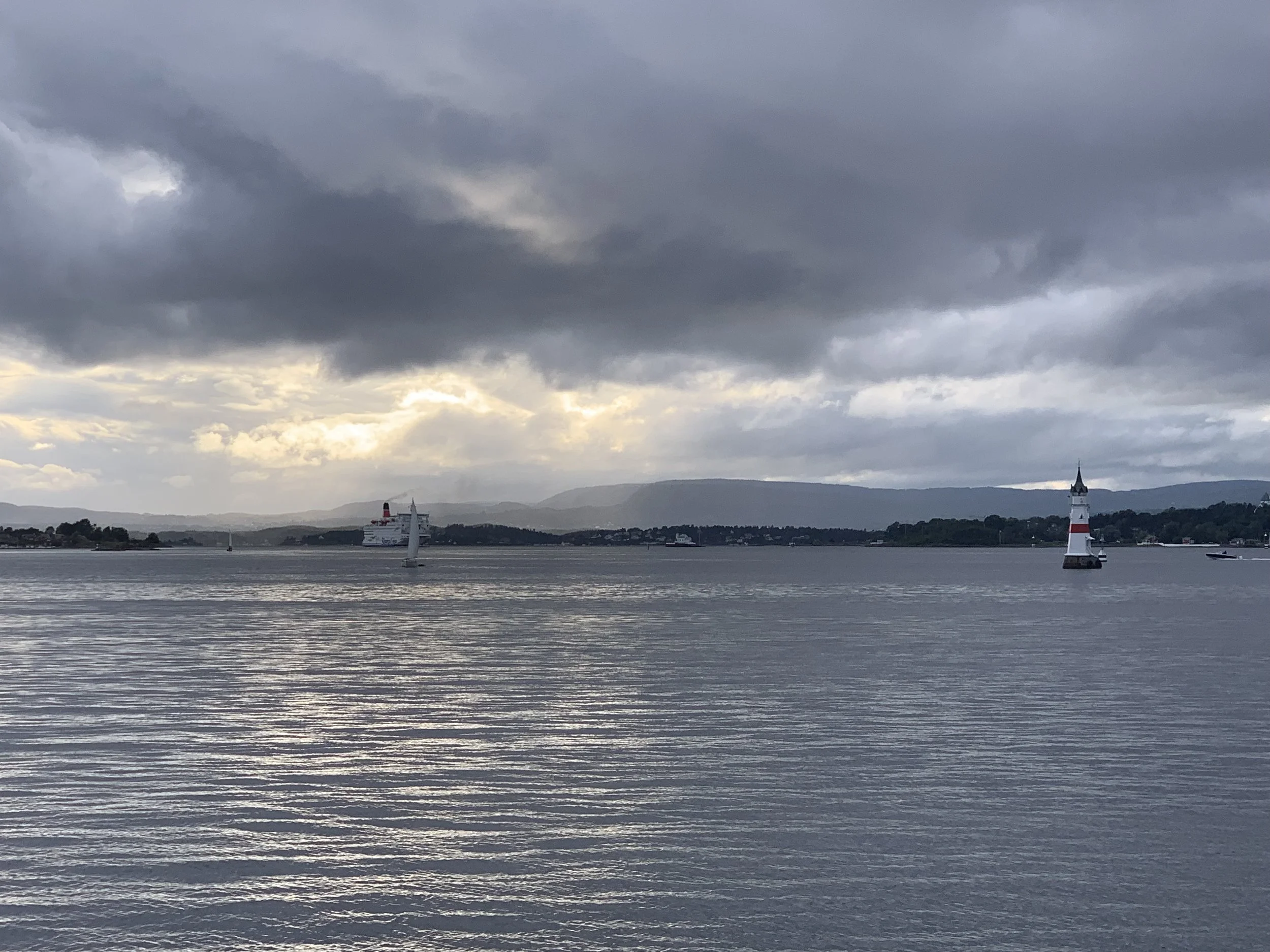
There is something about the light in Norway that I still don’t quite know how to describe. Even in the rain, it made me want to keep looking.
I traveled through Norway in September 2019, beginning in Oslo before taking the train across the mountains to Bergen. From there, the journey continued by boat through the fjords to Flåm and on to Voss—a trip shaped as much by the landscape and the movement through it as by the places themselves.
Both of my grandparents came from Norway, so traveling there was never simply about seeing a new country. I grew up with a connection to this place long before I understood much about it, and being there with my daughter gave the trip another layer entirely. There was something powerful about the two of us walking those streets together—three generations connected by a country that had been part of our family story long before either of us arrived.
What surprised me was how immediately I responded to Norway itself. I loved walking Oslo and Bergen without much purpose beyond looking. I loved the history embedded in the streets and buildings, the water everywhere, and the way the landscape seemed to change constantly with the weather. Later, traveling alone through the fjords in sheets of rain, I kept going out onto the bow of the boat because I couldn't stop looking.
And always, there was the light.
A Place That Was Already Part of Me
Oslo
Oslo was a city I loved experiencing on foot. Between the water, the architecture, the art and its distinct neighborhoods, simply walking and paying attention felt like enough.
We stayed in a quiet neighborhood near Hønse-Lovisas hus, with easy access to public transportation, and spent much of our time moving around the city without trying to cover everything. We visited the original Munch Museum in Tøyen, walked the waterfront around the Oslo Opera House in the rain, explored Grünerløkka after dark and took a ferry out into the Oslofjord for dinner. Some of my favorite moments came from places we never would have known to look for on our own.
Worth Seeking Out
SALT Art & Music
One of the highlights of our time in Oslo. SALT combines art, music, food and sauna culture in a collection of striking structures inspired by traditional Norwegian fish-drying racks. We booked a three-hour communal sauna session and moved between enormous and intimate saunas, cold plunges and traditional sauna rituals. It was social, slightly wild and completely unlike anything I'd done before. While we were there, the Arctic Pyramid held We Are Still the Same by Finnish artist Kaarina Kaikkonen, an installation made from 1,200 pieces of personal clothing. SALT is still operating; check the current program and book sauna sessions ahead.
Gressholmen Kro
One of the highlights while in Oslo, our Airbnb host sent us here, and we never would have found it otherwise. Take the ferry out to Gressholmen, walk around the island, then settle in for a meal at this tucked-away seasonal restaurant. The boat ride and island are as much a part of the experience as the meal.
Grünerløkka + Markveien
One of my favorite areas simply to walk, with independent shops, vintage, design, cafés and restaurants. Follow Markveien through the neighborhood and across Ankerbrua—also known as the Fairy-Tale Bridge—where four bronze sculptures by Norwegian artist Dyre Vaa have stood since 1937, depicting characters from Norwegian folklore. We walked it after the shops had closed and I still loved it; I'd go back during the day and give myself time to poke around.
Oslo Opera House + the Waterfront
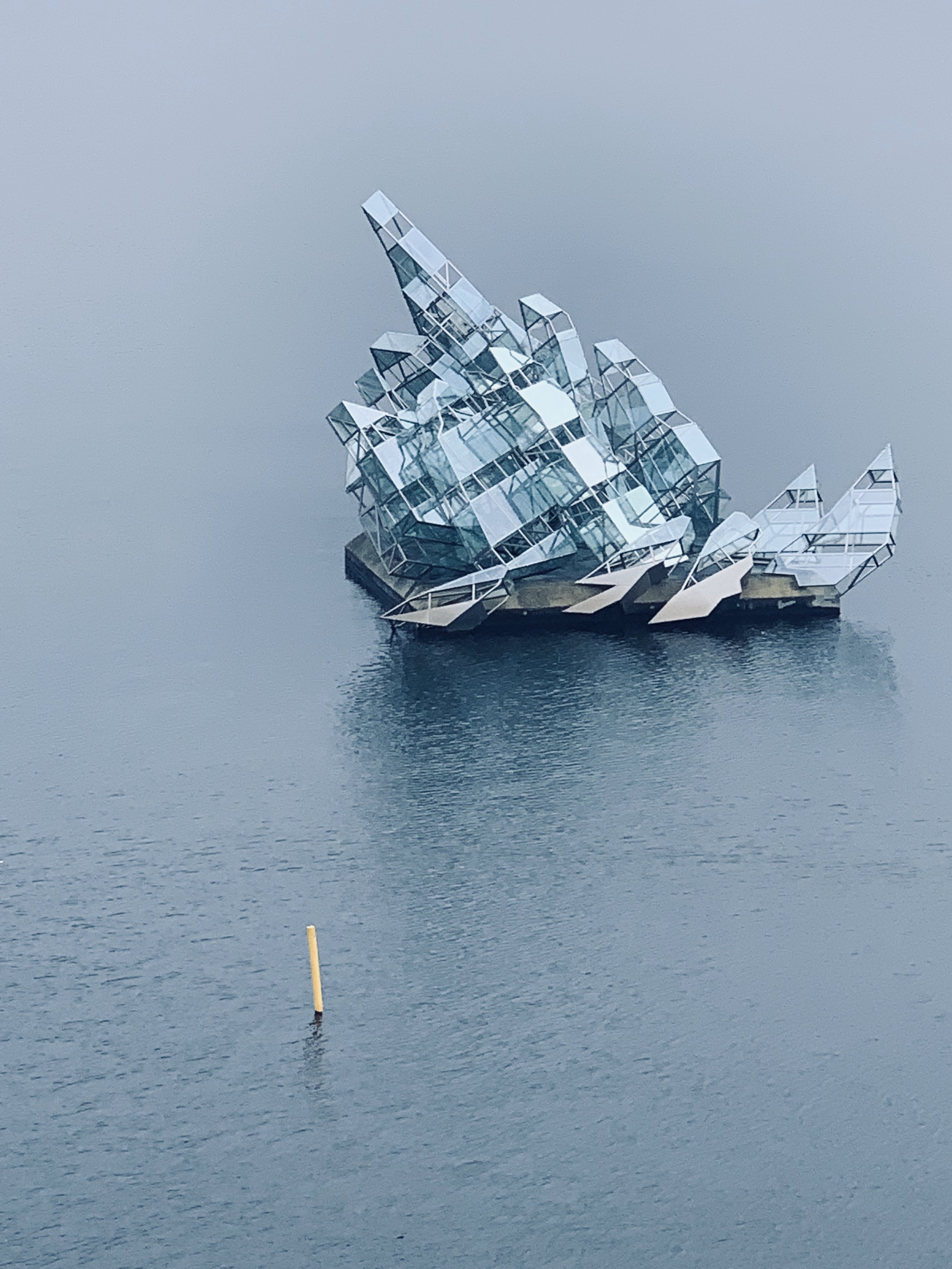
Go even if you aren't seeing a performance. Walk onto the sloping roof and around the waterfront—the architecture and changing light make this an especially good place to photograph. Just offshore is Monica Bonvicini's She Lies, the glass-and-steel sculpture that rotates with the wind and tide.
MUNCH
We visited the original Munch Museum in Tøyen in 2019. That museum has since closed and the collection moved to the much larger waterfront MUNCH in Bjørvika, near the Opera House. Rather than trying to recreate our visit, go see what Oslo has built for Munch now.
Storgata 26 / Oslo After Dark
We stumbled into Storgata 26 and found one of the most fun dance floors I've ever seen—a huge LED floor that changed color beneath you. The original club has since closed, but the same address is now home to Labyrinth, another music-and-dance-driven club. Even if you don't end up here, find somewhere to dance. Oslo has a lively club culture, particularly around electronic music, and going out gave us a completely different experience of the city.
Bergen
We traveled from Oslo to Bergen on the Bergen Railway, a six-and-a-half-hour journey that felt like an experience in itself. Opened in 1909 after years of construction through some of Norway’s most difficult mountain terrain, the railway climbs more than 4,000 feet before descending toward the western coast.
Outside the window were lakes, rocky mountains and vast stretches of open landscape that reminded me of high-altitude Colorado. It remains one of the most beautiful train journeys I’ve taken—and I wouldn’t trade it for a flight.
Worth Seeking Out
Mount Fløyen + Fløibanen
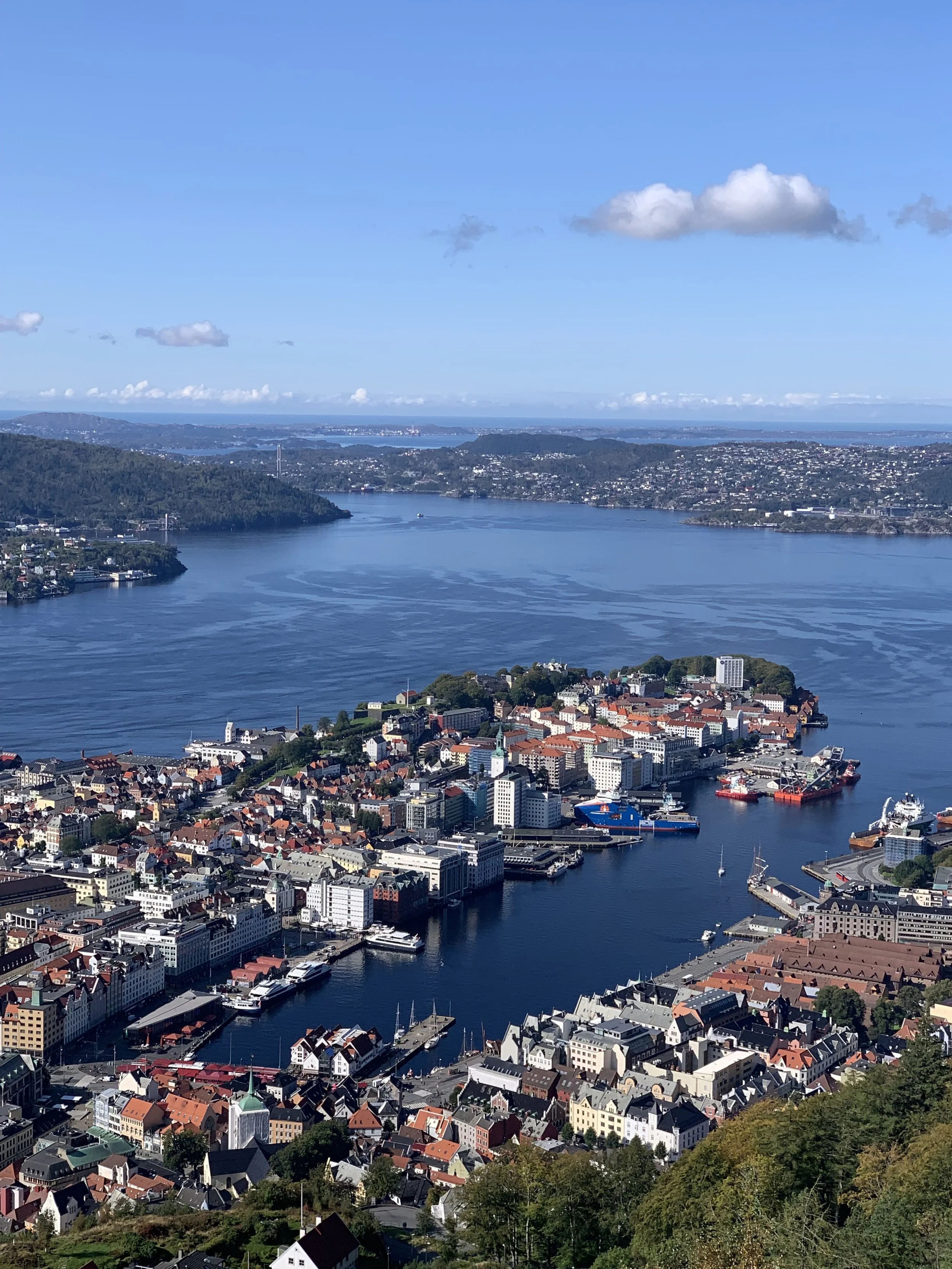
Take the Fløibanen funicular from the center of Bergen to the top of Mount Fløyen, but don't stop at the viewpoint. Head into the woods and walk the trails—the goats, forest and mountain landscape make it feel remarkably far from the city below. Fløibanen has been carrying people up the mountain since 1918. We finished our hike with a beer overlooking Bergen, which is a pretty great way to end it.
Skostredet + Vågsbunnen
This little pocket of Bergen was one of my favorite places to walk, filled with restaurants, cafés, shops, courtyards and street art. Skostredet has much deeper roots than its current incarnation: its name comes from the Old Norse word for shoemaker, and in medieval Bergen the street was home to dozens of shoemakers' workshops. Today it's an especially good area to explore without a particular destination in mind—walk around and stop somewhere that catches your eye.
Dr. Wiesener
We stayed nearby in Sandviken and walked here after settling into our Airbnb. The food was so good we ended up returning, but the building's history makes it even better: it opened in 1889 as a public bathhouse, built in memory of Bergen physician Joachim Wiesener and his belief that affordable bathing and better hygiene should be available to everyone. Today it's a wonderfully unpolished neighborhood pub and restaurant—and still somewhere I'd seek out.
Fisketorget / Bergen Fish Market
Bergen's fish market has been part of life around the harbor since the 1200s, when fishermen, farmers and merchants came here to trade. It's considerably more polished today, with the year-round indoor Mathallen and seasonal outdoor market, but it's still worth walking through for seafood and a glimpse of Bergen's centuries-old relationship with the sea.
Bryggen
You'll almost certainly find yourself here, and you should. Bergen's historic wharf became an important center of Hanseatic trade beginning in the Middle Ages and is now a UNESCO World Heritage Site. The harbor-facing stretch can feel touristy, so I'd see it for the history and architecture and then keep walking into Bergen's other neighborhoods.
Through the Fjords
After Bergen, I continued alone by boat through Sognefjord to Flåm. It rained almost the entire way—sheets of rain at times—but I kept going out onto the bow because the landscape was too extraordinary to watch through a window.
Sognefjord is Norway's longest and deepest fjord, stretching more than 200 kilometers inland and reaching depths of more than 1,300 meters. Traveling through it by boat gave me an entirely different sense of Norway: tiny settlements along the water, mountains rising almost vertically from the fjord, waterfalls and a landscape that seemed to keep changing around every bend.
From Flåm, I continued on to Voss, a small town between the fjords and mountains where I stayed for a couple of days before catching the train back to Oslo.
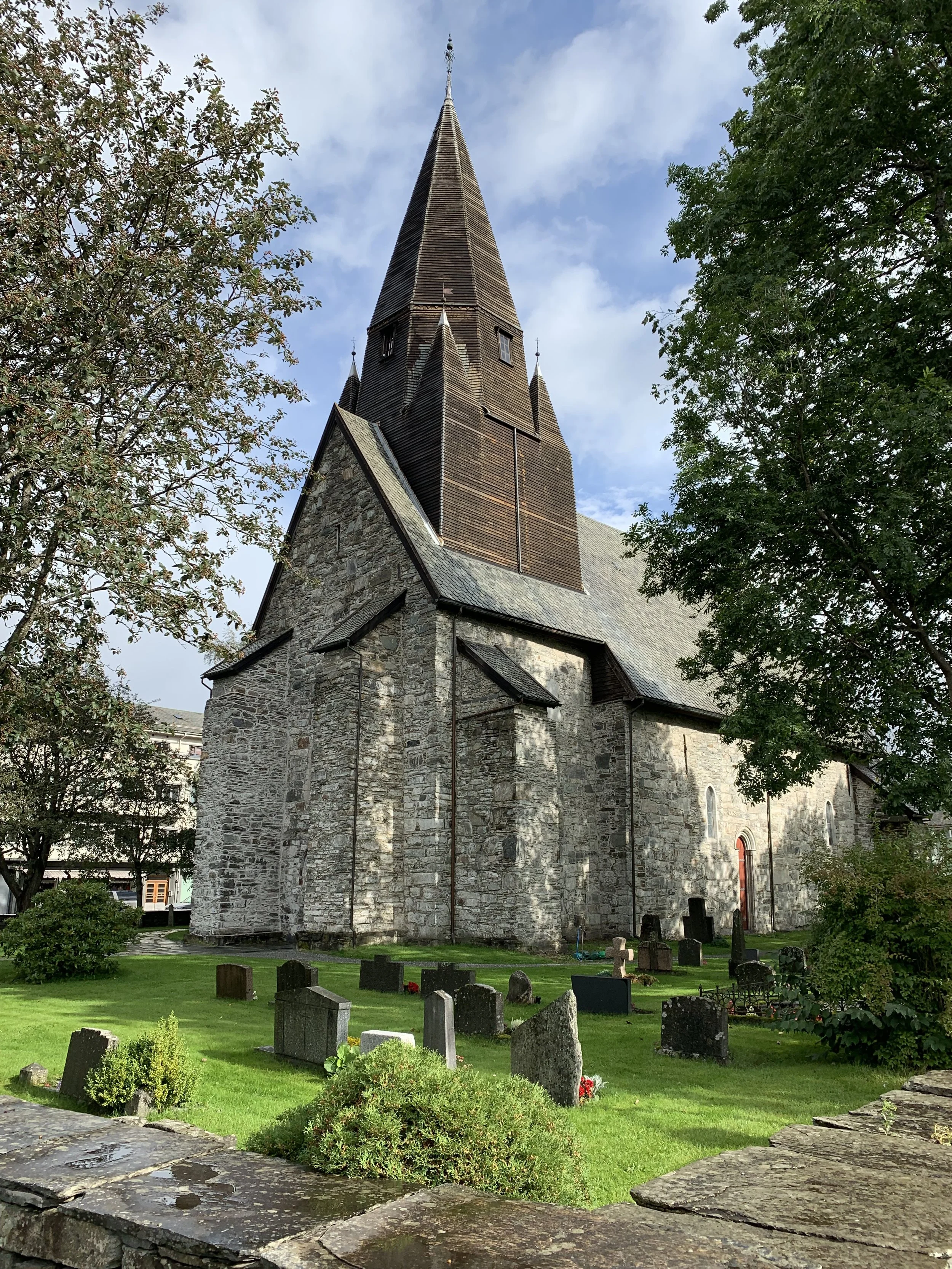
Voss grew around Vangskyrkja, the stone church at the center of town, completed in 1277 and still standing more than seven centuries later. The arrival of the railway from Bergen in 1883 transformed the once largely agricultural community; when the Bergen Railway eventually connected Bergen and Oslo in 1909, Voss became an important stop along the route.
It also happened to be exactly what I needed—a quiet, beautiful place to land for a couple of days before making my way back across the mountains.
Up Next—> The Arctic Circle—>September 2026—>Stay Tuned!